our minds
US
・UK
A1 初級
pron.代名詞私たちの心
Our minds were racing with ideas after the brainstorming session.
pron.代名詞私たちの知性
Our minds are powerful tools that we should use to learn and grow.
pron.代名詞私たちの意思
Our minds are made up; we're going to support the new initiative.
動画字幕
内なる独裁者とは誰か? (Who is the Dictator Within?)

- According to Hayes, one of the most harmful ways in which our minds become trapped in our thought processes is by learning or inferring problem solving rules that we convince ourselves we must follow.
ヘイズによれば、私たちの心が思考プロセスに囚われてしまう最も有害な方法のひとつは、私たちが従わなければならないと自分自身を納得させるような問題解決のルールを学んだり、推測したりすることだという。
- According to Hayes, "One of the most harmful ways in which our minds become trapped in our thought processes is by learning or inferring problem-solving rules that we convince ourselves we must follow." Rules are a great thing in many ways, as they're crucial for society to get by and for us to all get along.
困難な考えや感情を避けることは、心理的にも肉体的にも私たちに害を及ぼす。
2025年、ジャーナリングで人生を変えよう (Change Your Life by Journalling in 2025)

- And when you see these thoughts written down on paper, it's easier to not believe them so much because our minds can lie to us.
そして、その考えを紙に書き出すと、私たちの心は嘘をつくことがあるから、それをあまり信じなくなる。
- Because our minds can lie to us.
そして、自分の考えや感情について書けば書くほど、そこから切り離され、自分の考えや感情とあまり同一視しなくなる。
自分自身と出会うためのライティング・エクササイズ (A Writing Exercise to Help You Meet Yourself)
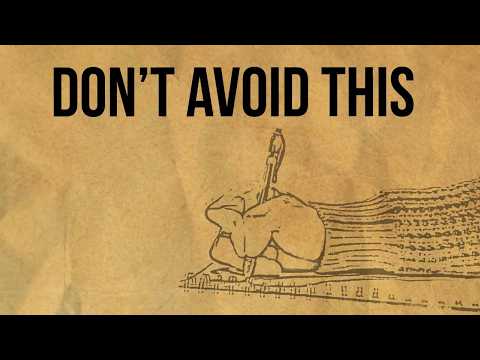
- While also believing that the ultimate ambition of writing should be the expression of our genuine thoughts, this technique proposes that our best chances of reaching such thoughts lies in making every effort not to think too much, instead, just to write down everything that comes into our minds the very moment it does so, without any interest in seeming logical, elegant, clever or even very sane.
文章を書くことの究極の目的は、自分の純粋な考えを表現することであると同時に、この技法は、そのような考えに到達するための最良のチャンスは、考えすぎないようにあらゆる努力をすることであり、その代わりに、論理的で、エレガントで、利口で、あるいは非常にまともであるように見えることに一切興味を持たずに、心に浮かんだことをその瞬間にすべて書き留めることであると提唱している。
- While also believing that the ultimate ambition of writing should be the expression of our genuine thoughts, this technique proposes that our best chances of reaching such thoughts lie in making every effort not to think too much, not to agonize about every word, not to go back and correct anything—and instead just to write down everything that comes into our minds the very moment it does so, without any interest in seeming logical, elegant, clever, or even very sane.
文章を書くことの究極の目的は、自分の純粋な考えを表現することであると同時に、この技法は、そのような考えに到達するための最良のチャンスは、考えすぎないようにあらゆる努力をすることであり、その代わりに、論理的で、エレガントで、利口で、あるいは非常にまともであるように見えることに一切興味を持たずに、心に浮かんだことをその瞬間にすべて書き留めることであると提唱している。
心の痛みの解決策:記憶 (A Solution To Heartache: Memory)
- But this may be doing our minds a great disservice.
しかし、これは私たちの精神に大きな不利益をもたらしているのかもしれません。
- But this may be doing our minds a great disservice.
しかし、これは私たちの精神に大きな不利益をもたらしているのかもしれません。
恋愛はゆっくり進むべき理由 (Why We Need to Take It Slowly in Love)
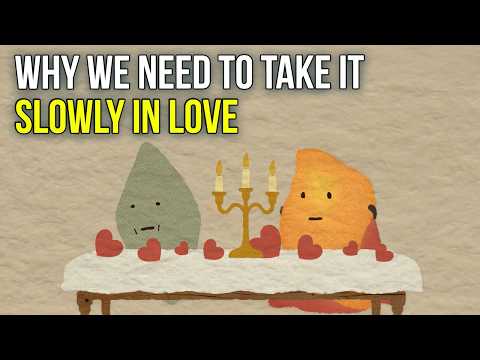
- In our youngest years, we may have had to acclimatise ourselves to a very uneven supply of affection. Perhaps mother was unavailable and father was violent. There might have been a lot of sarcasm and not much patience for our sorrows or opinions. And therefore, the only way to survive would have been to withdraw, to learn to play alone and to make our peace with a restricted emotional diet. So when someone arrives in adulthood promising us a banquet, when someone lays out dish after dish of generosity and care, when someone promises us unlimited kindness and tenderness, our first response may not be joy but nausea, not delight but panic. We may be unable to absorb or metabolise any of the rich nutrients before us and, without quite knowing why, in order to maintain our poise, may have no option but to turn on our kind hosts, blame them for being weak or odd and run away. We might wish to tell them, please be so kind as not to be too kind, please be generous enough not to overwhelm me, please let me find my own way to reciprocation. On the other side of the ledger, we, the so-called generous ones, the banquet givers who like to move fast, should also be brave enough to question our behaviour. It may look as if we are being purely and simply romantic, Paris on the second date, nicknames after a week. But we may turn out to be, beneath our bold gestures, something rather more complicated and sad, untenably and unhelpfully anxious. We lose our minds if we haven't heard from them in two hours.
幼い頃、私たちは愛情の不均一な供給に慣れなければならなかったかもしれない。もしかしたら、母親は手に負えず、父親は暴力的だったかもしれない。皮肉が多く、私たちの悲しみや意見にあまり耳を傾けてくれなかったかもしれない。そのため、生き延びる唯一の方法は、引きこもり、一人で遊ぶことを学び、制限された感情の食事と折り合いをつけることだっただろう。だから、大人になってから誰かが私たちに宴会を約束してくれたり、気前と気遣いの料理を次々と並べてくれたり、無制限の親切と優しさを約束してくれたりしたとき、私たちの最初の反応は
- We lose our minds if we haven't heard from them in two hours.
キスすることの重要性 (The Importance of Kissing)

- But there is another way in which our minds can work—a way in which a feeling can follow from an action.
終わりで急に離れないでください。さらに数分間お互いを見つめ合い、微笑んでください。
- But there's another way in which our minds can work,
しかし、私たちの心が働く別の方法もあります。
人生は幸せであることではない (Life is Not About Being Happy)
- And judged on this basis, many of us have to admit, in the silence of our minds, that we're not really doing very well. There's so much that every year, and perhaps almost every day, comes along to spoil our ambitions. There's a power struggle at the office, there's a problem in our families, our friends feel superficial or disengaged, our anxieties don't abate and our relationships are scratchy or distant. Our difficulties generate a basic layer of misery, but then a secondary layer is swiftly added to it, caused by an underlying sense that our unhappiness represents a fundamental violation of life's true purpose. Not only are we unhappy, we are unhappy that we are unhappy, in the light of our tightly held belief in the possibility of a state of enduring satisfaction. We're both sad and crushed that we have failed at the single most important goal open to all sane and ambitious humans.
その上で判断すると、私たちの多くは、心の静寂の中で、自分たちがあまりうまくいっていないことを認めざるを得ない。毎年、いやほとんど毎日、私たちの野心を台無しにするようなことがたくさんある。オフィスでの権力闘争、家庭内の問題、友人たちの表面的な感情や無関心、不安はおさまらず、人間関係は傷ついたり離れたりする。私たちの困難は、基本的な不幸の層を生み出すが、不幸は人生の真の目的に対する根本的な違反であるという感覚が根底にあるため、それに二次的な層がすぐに加わる。私たちは不幸であるだけでなく、永続的な満足の可能性を
- And judged on this basis, many of us have to admit, in the silence of our minds, that we're not really doing very well.
その上で判断すると、私たちの多くは、心の静寂の中で、自分たちがあまりうまくいっていないことを認めざるを得ない。毎年、いやほとんど毎日、私たちの野心を台無しにするようなことがたくさんある。オフィスでの権力闘争、家庭内の問題、友人たちの表面的な感情や無関心、不安はおさまらず、人間関係は傷ついたり離れたりする。私たちの困難は、基本的な不幸の層を生み出すが、不幸は人生の真の目的に対する根本的な違反であるという感覚が根底にあるため、それに二次的な層がすぐに加わる。私たちは不幸であるだけでなく、永続的な満足の可能性を
なぜあなたは間違った人と結婚するのか - アラン・デ・ボトン (Why You Will Marry the Wrong Person - Alain de Botton)

- We believe, rather as a young child believer of its parent, that a true lover will guess what is in our minds.
愛とは何かの核心は、他の人の行動を解釈しようとする意志です。
- One of the great errors that human beings make is permanently to feel that other people know what's in their minds without us having said what's in our minds.
私たちが苦手としがちなのは、愛することができる人は誰でも
アイソレーション - マインド・フィールド (Ep 1) (Isolation - Mind Field (Ep 1))

- Well, our minds want to remain active.
それをこの部屋の中で行うのです
- - Well, our minds want to remain active.
実際の時刻との解離はもう倍ですね
アイデアの歴史 - マナー (HISTORY OF IDEAS - Manners)

- Rousseau now contrasts favourably with modern mannered people. Rousseau tells us that people living in what he calls the state of nature were, in his eyes, far superior to educated and mannered Parisians. Their manners may have been simple, but they were honest and forthright, without the sins of what he now terms the over-civilised. Rousseau retells the story of civilisation as one of loss and decline, from a primordial state of fresh-faced curiosity, honesty and enthusiasm, to barbarous over-politeness, fakery and deceit. He describes the elaborate French court at Versailles as less civilised than an early human cave. Readers across Europe are astonished, and not a little impressed, by this impudence. For hundreds of years, moralists have been arguing that our natural selves are wild, harmful, over-sexual and dangerous, and that we must learn to tame them for the sake of others. Now Rousseau suggests the diametrical opposite. Civilisation has gone too far, it's our mannered selves that have become the problem, and the task of a properly evolved civilisation is to throw off the chains of manners, to relax us, strip off the etiquette and return to primitive frankness. Rousseau's point continues to echo down to our own times. It is his voice we can hear whenever someone sticks up for the simpler life, and suggests we dress less formally, eat dinner more casually and more readily say whatever is passing through our minds. New York, United States, 1827. A French aristocrat, Alexis de Tocqueville, is on a tour of the young United States in an effort to understand the spirit of a new kind of society, a democracy. He is immediately struck by American manners, or lack thereof. In Europe, reflects de Tocqueville, manners have been codified to emphasise hierarchical differences between people. Ordinary people defer to aristocrats, aristocrats to royalty, and so on. But in the United States, everything is done so as to suggest that there are no differences between people. No one takes off their hat to anyone, a postman can casually greet a judge, a mule driver can strike up cheerful banter with a wealthy merchant, and one cannot tell by someone's clothes whether they might be living in a mansion or a hut. Expressions like how you doing and hi are heard everywhere across the new republic. It could be charming, but the aristocratic de Tocqueville wryly notes a problem. These casual manners do not do away with class and wealth differences. They merely sentimentally disguise them. The manners of old Europe have been accused of being cruel in their stress on hierarchy.
ルソーは今、現代の礼儀正しい人々と好対照をなしている。ルソーの目には、自然状態と呼ばれる時代に生きる人々は、教養とマナーを身につけたパリジェンヌよりもはるかに優れていた。彼らのマナーは単純であったかもしれないが、正直で率直であり、現在彼が過度の文明人と呼んでいるような罪はなかった。ルソーは文明の物語を、新鮮な好奇心、正直さ、熱意といった原初の状態から、野蛮な礼儀正しさ、偽り、欺瞞へと向かう喪失と衰退の物語として語り直す。彼はヴェルサイユの精巧なフランス宮廷を、初期の人間の洞窟よりも文明化されていないと表現
- and more readily say whatever is passing through our minds.